
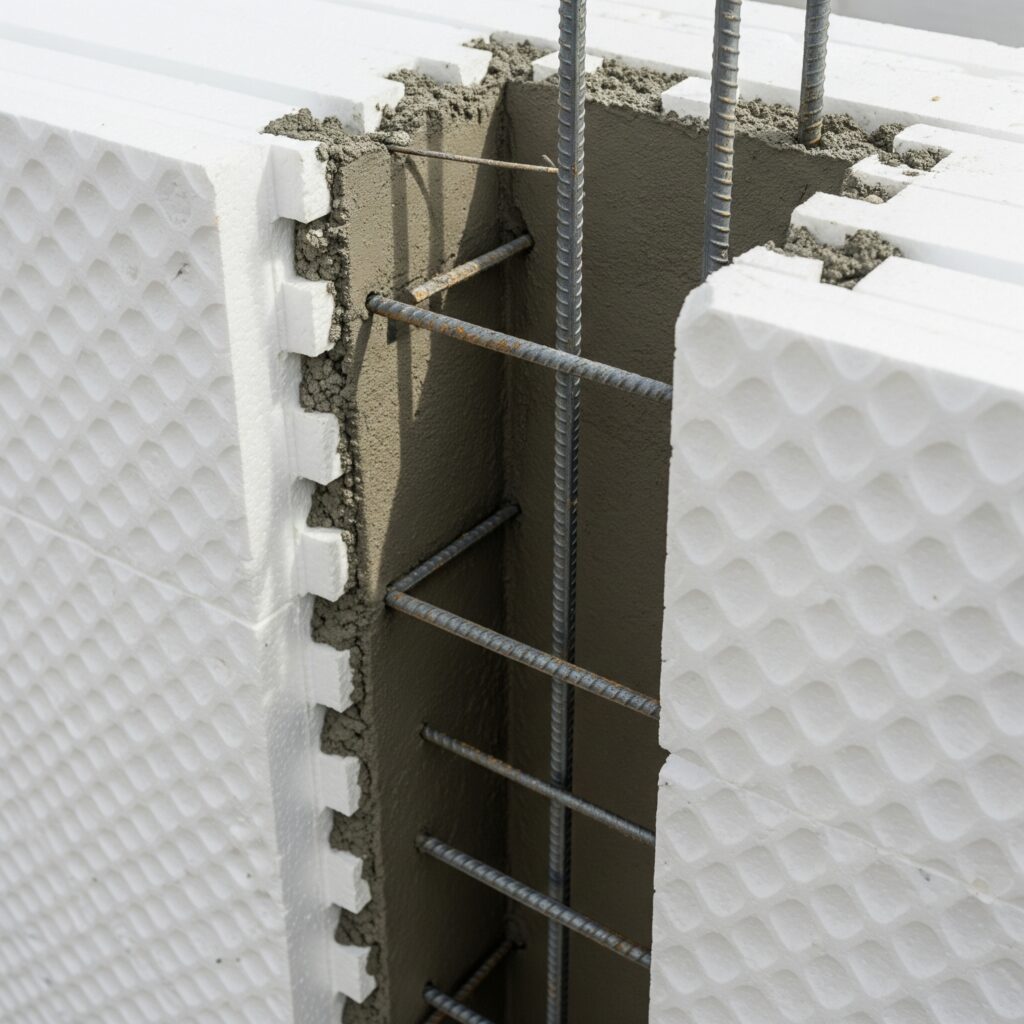
When it comes to building a new home, most people are familiar with traditional wood-frame construction. However, more and more homeowners are beginning to explore a different option that offers unique advantages in comfort, efficiency, and durability. That option is ICF, which stands for Insulated Concrete Form. If you are new to this term, do not worry. This guide will break down what ICF is, how it works, and why it may be the right choice for your next home.
What Is ICF Construction?
Insulated Concrete Form construction is a building method that uses hollow blocks or panels made of insulating foam. These blocks are stacked into the shape of the walls of a home, and then filled with reinforced concrete. Once in place, the foam and concrete work together to create walls that are stronger, more energy-efficient, and more durable than traditional wood framing. The foam stays in place permanently, providing insulation on both sides of the wall while the concrete core delivers structural strength.
Why Choose ICF Over Traditional Wood Framing?
One of the biggest differences between ICF and traditional wood framing is strength. Because of the solid concrete core, ICF homes can withstand extreme weather conditions, including hurricanes and strong winds. This makes them especially appealing for coastal regions like the Gulf Coast, where resilience against storms is a priority.
Beyond strength, ICF homes are also highly energy-efficient. The continuous insulation and thermal mass of the walls help keep temperatures stable indoors, reducing the strain on heating and cooling systems. Homeowners often notice lower utility bills compared to wood-frame homes, which makes ICF a smart investment in the long run.
The Comfort Benefits of ICF Homes
While energy savings are an important factor, comfort is another benefit that stands out with ICF construction. Because the walls are thicker and insulated on both sides, ICF homes are quieter. Outside noises like traffic, neighbors, or even storm winds are significantly reduced. This creates a calm and peaceful environment indoors. The stable indoor temperatures also mean fewer hot or cold spots, making the home more comfortable year-round.
Sustainability and Eco-Friendly Living
Sustainability is another reason why homeowners are turning to ICF. The insulation properties of ICF construction reduce the overall energy use of the home, which lowers the carbon footprint. The durability of the concrete core also means these homes last longer with fewer repairs, reducing the need for replacement materials over time. For families interested in eco-friendly living, ICF is a natural fit.
What About Cost?
It is true that ICF homes can cost more upfront compared to traditional wood-frame construction. However, the long-term savings often outweigh the initial investment. Lower utility bills, fewer maintenance costs, and increased durability all add up over the lifespan of the home. In addition, the energy efficiency and storm resistance of ICF construction can often lead to lower insurance premiums, which is another way homeowners can save.
A Smart Choice for the Future
When building a home, the goal is not just to create a space for today but to design something that will serve your family for decades. ICF construction offers durability, comfort, and efficiency that stand the test of time. At Batten Builders, we specialize in helping homeowners understand their options and choose the building methods that make sense for their lifestyle and location. For many families, ICF is more than just a construction method. It is peace of mind, knowing that your home is strong, sustainable, and built to last.


