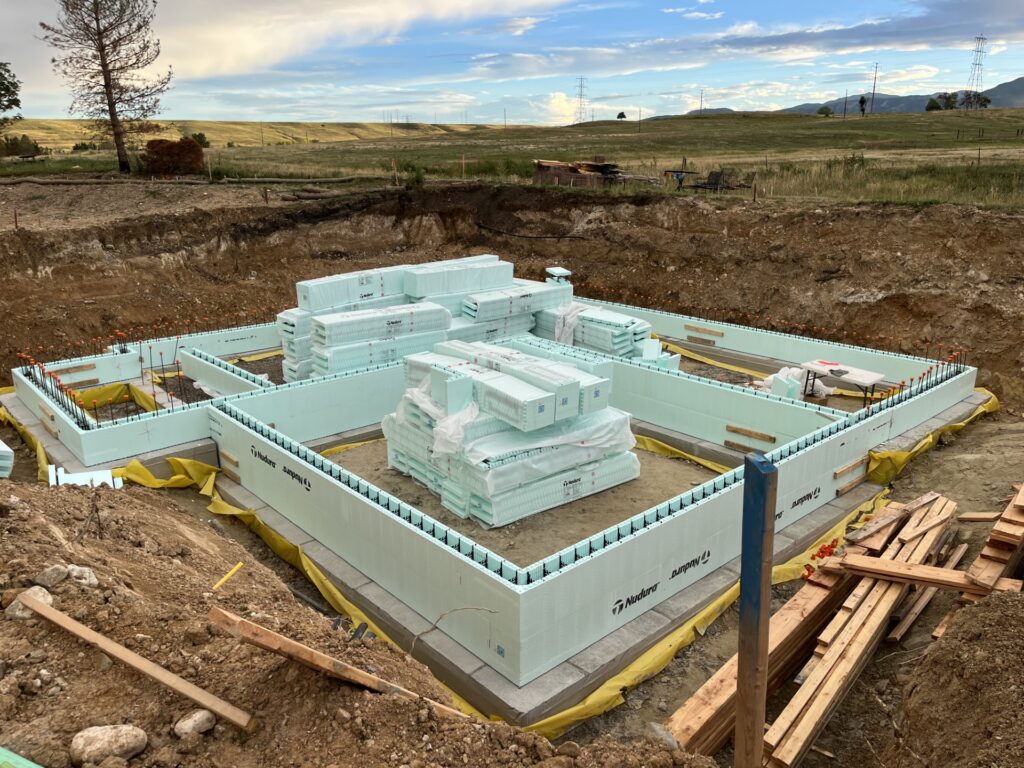

In today’s construction industry, homeowners are becoming increasingly interested in the science that influences the comfort, safety, and efficiency of the homes they live in. One of the most significant advancements to shape modern building practices is the development of Insulated Concrete Form (ICF) walls. While traditional wood-frame construction remains common, more people are discovering that the structure of a home plays a major role in its long-term performance. By exploring the science behind ICF walls, it becomes clear why this method consistently outperforms traditional construction across nearly every measurable category. From thermal mass to air barriers, and from insulation continuity to sheer structural strength, ICF technology offers science-backed advantages that directly benefit homeowners for decades.
Understanding the Core Structure of ICF Walls
To understand what makes ICF walls superior, it is important to first look at what they actually are. Insulated Concrete Forms are essentially hollow blocks or panels made of high-density foam that are stacked like puzzle pieces to create the shape of a wall. Once assembled, they are filled with reinforced concrete. The result is a solid, continuous concrete core sandwiched between two thick layers of insulation. Unlike wood frame walls, which contain multiple materials, joints, cavities, and potential weak points, ICF walls form an integrated monolithic structure that eliminates many of the vulnerabilities found in standard wood construction. This integration is what gives ICF its most powerful scientific advantages.
The Role of Thermal Mass in Home Performance
One of the greatest scientific benefits of ICF construction is its thermal mass. Thermal mass refers to a material’s ability to absorb, store, and slowly release heat. Concrete has very high thermal mass, which means it does not rapidly fluctuate with outdoor temperatures. When this dense concrete core is paired with continuous insulation on both sides, the result is a wall system that manages heat transfer in a highly efficient way. During hot weather, the thermal mass absorbs warmth and prevents it from passing through into the home’s interior. As daytime temperatures cool at night, the stored heat is gradually released outward, keeping the interior space stable. During winter, the opposite occurs, allowing heat produced by the home to stay inside longer.
Traditional wood-frame walls cannot replicate this effect because they lack density and rely solely on insulation to control temperature changes. Insulation alone cannot regulate heat flow with the same stability that thermal mass provides. This scientific advantage is one of the primary reasons ICF homes maintain consistent indoor temperatures, reduce strain on heating and cooling systems, and create a noticeably more comfortable living environment.
Continuous Insulation and Why It Matters
Beyond thermal mass, another critical scientific component of ICF performance is insulation continuity. In traditional construction, insulation is installed in segments between wooden studs. These studs create thermal bridges, which are areas where heat can easily pass through because the insulation is interrupted. Even a well-constructed wood-frame wall has thermal bridging every sixteen inches, creating hundred of small pathways for heat loss or heat gain. Over time, this leads to energy waste, drafts, and reduced comfort.
ICF walls eliminate this problem entirely because the insulation is built into the form itself. The foam panels create continuous insulation that covers the entire wall surface without gaps or breaks. The absence of thermal bridges means that heat transfer is dramatically reduced, allowing the home to perform far better in every season. The consistency of insulation also means that ICF homes often meet or exceed energy efficiency standards without requiring additional materials or complex building techniques. The science is simple: heat always seeks the path of least resistance, and ICF walls remove that path.
The Importance of Superior Air Barriers
Air infiltration is one of the most common issues in traditional construction and one of the biggest contributors to energy loss. Wood-frame walls contain numerous joints, seams, and penetrations, all of which can allow air to leak into or out of the home. Even with house wrap, caulking, and insulation, these weak points can lead to drafts, temperature inconsistencies, and reduced indoor air quality. Over time, materials expand, contract, and shift, causing gaps to form and making the problem worse.
ICF walls create a natural air barrier because the concrete core is continuous, dense, and free of framing cavities. The foam panels on each side add an additional layer of airtight protection. When the walls are properly sealed around windows and openings, the entire structure becomes substantially more airtight than a traditional wood-frame home. This airtightness means the indoor environment is easier to control, dust and allergens stay outside, and conditioned air remains where it belongs. The scientific principle at work is simple: air moves from high-pressure to low-pressure areas through openings. When those openings are minimized, the home becomes more efficient, healthier, and far more comfortable.
Structural Strength and Engineering Advantages
While thermal performance and insulation are often the focus of ICF discussions, the structural science behind these walls is equally impressive. An ICF wall is essentially a steel-reinforced concrete structure, which gives it remarkable resistance to forces such as high winds, flying debris, and pressure changes during extreme weather events. Traditional wood-frame walls rely on structural connections at various points, including nails, screws, studs, and sheathing. Each connection becomes a potential failure point during severe conditions. This is especially important in hurricane-prone regions where wind loads and impacts can place enormous stress on a home’s structure.
Concrete, when reinforced correctly, can withstand much higher loads and stresses than wood. This makes ICF homes significantly more durable and resilient. The foam forms that stay in place contribute to both energy performance and structural stability by protecting the concrete from temperature swings that can cause thermal stress. The combination of materials creates a wall system that is not only stronger but also more stable over time, reducing maintenance and preventing structural degradation. The physics behind these benefits are straightforward: mass, density, and continuity provide superior resistance to movement, pressure changes, and external forces.
Moisture Control and Mold Prevention
Moisture infiltration is a common problem in many homes, especially those built with wood framing. Wood is an organic material that can absorb moisture, leading to mold growth, rot, and structural weakening. Insulation materials inside wood-frame walls can also trap moisture, worsening the problem. ICF walls, on the other hand, do not contain materials that can become a food source for mold. The concrete core is non-organic, and the foam is closed-cell, which means it resists moisture absorption. When installed correctly, ICF walls significantly reduce the risk of moisture intrusion and create an environment where mold is far less likely to develop.
Because ICF walls are inherently airtight, homes constructed with this method also have more controlled ventilation. Properly designed HVAC systems can manage humidity more effectively, creating a healthier indoor environment. The scientific principle at play here revolves around vapor diffusion and the ability of materials to absorb or resist moisture. The materials used in ICF construction resist moisture movement better than traditional materials, which prevents many of the long-term issues homeowners face in wood-frame structures.
Long-Term Efficiency and Sustainability
When analyzing the science of ICF walls, it becomes clear that their benefits extend far beyond the initial construction phase. The combination of thermal mass, airtight construction, continuous insulation, and structural strength creates a home that performs exceptionally well over its lifetime. Homeowners enjoy lower energy bills, fewer drafts, greater durability, and improved indoor air quality. From a sustainability perspective, buildings that require less energy to operate and last longer contribute to a reduced environmental footprint.
Traditional wood-frame homes may require additional materials, frequent repairs, and more mechanical support to achieve similar performance levels. ICF homes begin with an inherent scientific advantage that continues to deliver benefits year after year. As building codes evolve and homeowners demand more efficient and resilient structures, the science behind ICF construction continues to set a new standard for what modern housing can achieve.
Why ICF Outperforms Traditional Construction
The reasons ICF walls outperform traditional construction come down to the scientific principles of heat transfer, air movement, structural physics, and material performance. A wall system that combines high-density thermal mass, continuous insulation, natural airtightness, and reinforced concrete simply outperforms a system built from lighter, discontinuous materials with multiple weak points. The difference is measurable, observable, and most importantly, felt by the homeowners who experience greater comfort and long-term savings.
As more people learn about the science behind ICF walls, they begin to understand why builders continue to adopt this method and why homeowners are increasingly choosing ICF for new construction. The advantages are not trends or marketing claims; they are proven results backed by decades of engineering, research, and real-world performance. For anyone seeking a home that is stronger, more efficient, and designed for the future, ICF construction offers one of the most scientifically advanced solutions available today.