
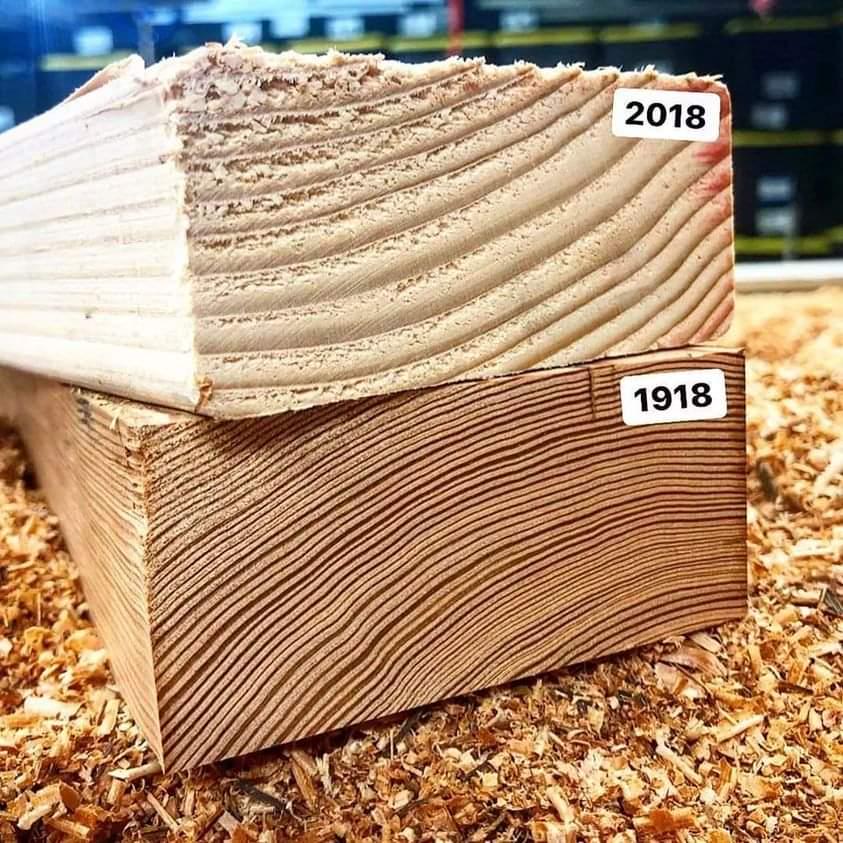
Why Newer Isn’t Always Better
In the world of homebuilding, there’s often an assumption that newer is always better. With modern designs, cutting-edge technology, and updated building materials, it’s easy to assume that homes built in recent decades are superior to those constructed in the mid-20th century. However, when it comes to durability, longevity, and quality, homes built before 1980 often outperform their newer counterparts in significant ways.
At Batten Builders, we specialize in both concrete and wood homes, and over the years, we’ve seen firsthand the differences between older homes and newer constructions. One of the most noticeable discrepancies is the quality of the materials used. In particular, the quality of wood used in homebuilding has drastically declined since the 1980s, leaving many modern homes vulnerable to issues that older homes rarely face.
The Decline of Lumber Quality Since the 1980s
The most notable shift in building materials occurred in the 1980s, when the supply of old-growth timber began to dwindle. Old-growth timber, which had been used for centuries in homebuilding, is now a rarity due to over-harvesting and environmental regulations. This shift marks the beginning of a significant decline in the quality of lumber available for construction purposes.
Wood that was once slow-grown and dense, full of heartwood that added strength and durability, was replaced by fast-growing trees that simply don’t offer the same longevity or resilience. This fast-growing wood is less dense, softer, and lacks the natural oils and resins that made old-growth lumber so incredibly durable. While it may be more abundant and cheaper, it comes with a host of issues that often go unnoticed by homeowners.
The Difference Between Heartwood and Sapwood
To understand why older homes are often better built than newer ones, it’s crucial to understand the difference between heartwood and sapwood. Heartwood is the dense, inner part of the tree that is much harder and more resistant to decay and damage. In contrast, sapwood is the outer, newer layer of the tree, which grows quickly and is far less durable.
Homes built using slow-grown, old-growth timber have more heartwood, making them naturally stronger and longer-lasting. On the other hand, homes constructed with modern lumber primarily contain sapwood, which is far more prone to rotting. The reason for this is simple: sapwood lacks the natural preservatives that heartwood possesses, making it a much easier target for environmental factors like moisture, mold, and pests.
When sapwood begins to rot, it compromises the structural integrity of the entire home. This is why many newer homes experience problems with wood decay and damage much earlier in their lifespans than older homes.
Resistance to Termite Damage
Another important factor that contributes to the superiority of older homes is their resistance to termite damage. Old-growth timber is naturally resistant to termites, thanks to its high resin content. The resinous properties of old lumber make it much harder for termites to break down the wood. These properties were simply not present in the newer wood that began dominating construction in the 1980s.
Modern wood is much softer and contains far fewer natural resins, which makes it more attractive to termites. Termites are more easily able to consume this softer, less dense wood, which can lead to significant damage over time. In contrast, a home built with old-growth lumber is far less likely to fall prey to these destructive pests.
Longevity and Investment Value
While it might be tempting to buy into the idea that newer homes are always superior, the reality is that homes constructed in the mid-20th century are often more resilient and better built than those built in recent decades. If a home built before 1980 has been properly maintained and its plumbing and electrical systems have been updated, it’s often a better investment than purchasing a newer build.
The slow-growing, high-quality lumber used in mid-century homes is simply built to last longer. These homes were constructed with materials that have stood the test of time, making them far more durable than modern homes. Additionally, older homes often have superior craftsmanship, as builders from the mid-20th century took more time and care in their work, which is reflected in the overall quality and longevity of the structure.
Concrete Homes
At Batten Builders, we also specialize in building concrete homes, which offer many of the same benefits as mid-century homes built with old-growth lumber. Concrete is an incredibly durable and long-lasting material that doesn’t suffer from the same issues as modern wood. Concrete homes are resistant to rot, termites, and fire, making them a solid investment that will likely outlast traditional wood-frame homes.
Concrete homes provide an excellent alternative for those who want a low-maintenance, long-lasting structure. For homeowners who prefer the aesthetic of wood but are concerned about the durability of modern lumber, concrete can be the perfect solution. With the right design, you can achieve a beautiful, functional home that will stand the test of time.
Updating Plumbing and Electric
When considering whether to purchase an older home or a newer one, it’s important to keep in mind that modern plumbing and electrical systems are often a necessary upgrade in older homes. While the structure of a home from the mid-20th century may be superior, outdated plumbing and electrical systems can present safety and functionality issues.
Fortunately, these systems are relatively easy to update, especially with the help of professional contractors. When updating an older home, it’s important to ensure that the plumbing and electrical systems are up to modern standards, as this can improve the home’s safety and efficiency. However, when it comes to the structure of the home itself, you’re unlikely to find better quality materials than those used in mid-century homes.
A Better Investment
While newer homes may come with a host of modern amenities, they often don’t match the durability and quality of homes built before 1980. The decline in lumber quality since the 1980s has left many newer homes vulnerable to rot, termites, and other forms of damage that mid-century homes rarely experience.
If you’re looking for a home that will stand the test of time, a well-built mid-century home with updated plumbing and electrical systems is an excellent choice. And for those who prefer the modern durability of concrete, we offer homes that are built to last a lifetime. Whether you choose a wood or concrete home, investing in quality construction is always a wise decision.

